
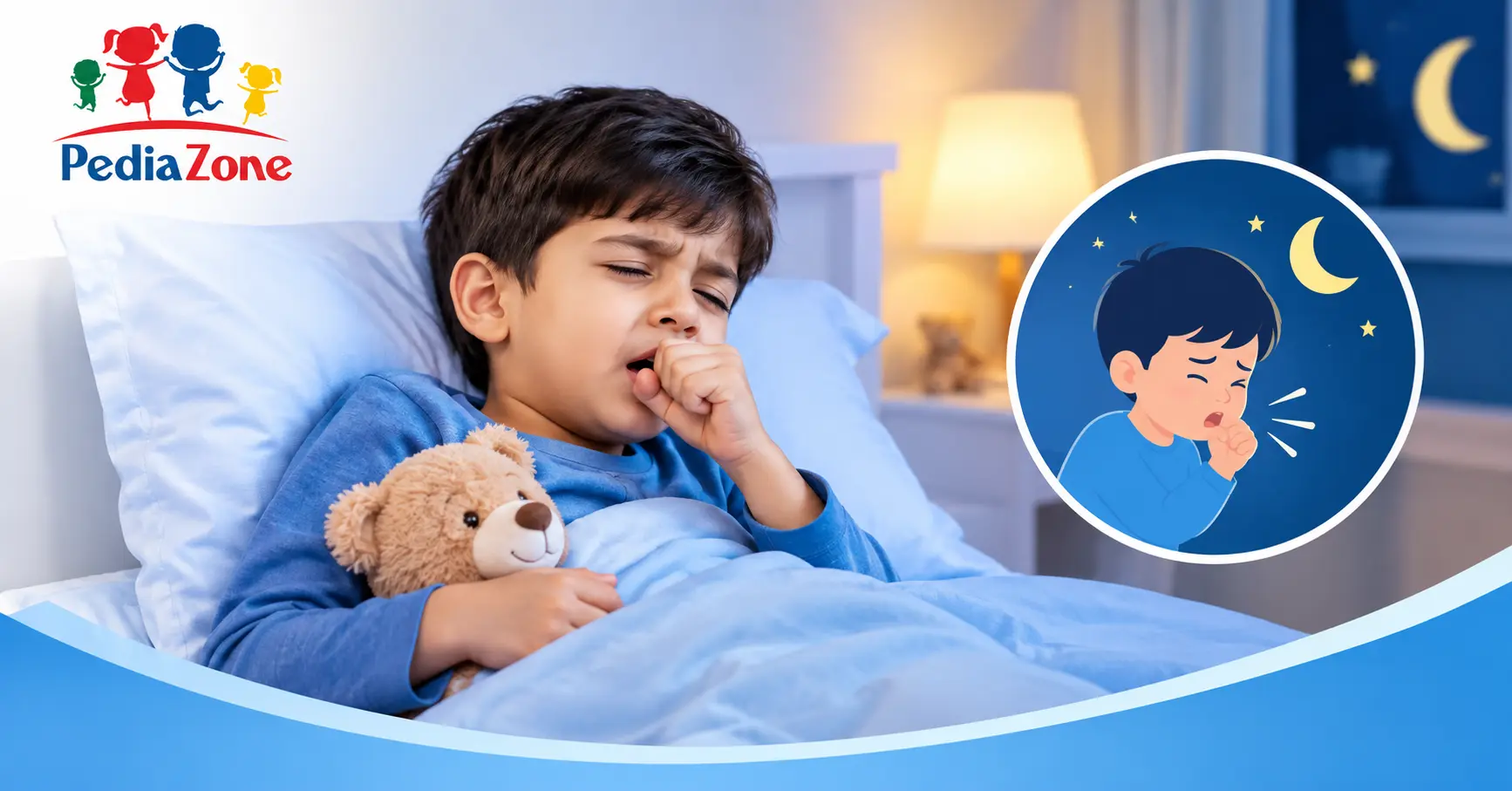
Why Does Coughing Often Get Worse at Night in Children?
A child may seem fine during the day but start coughing more after bedtime. This can worry parents, especially when the cough keeps interrupting sleep.
Nighttime coughing is common in children and does not always mean the illness is becoming worse. A cough is one of the body’s natural ways of clearing mucus and irritants from the airways.
But why does it often seem worse at night?
Why Does Coughing Increase at Night?
One reason is the change in position.
During the day, a child spends more time sitting or standing. When lying down, mucus from the nose can move toward the back of the throat. This can irritate the throat and trigger coughing.
This is common during a cold, when children may have a blocked or runny nose. The mucus can keep irritating the throat while they sleep.
The bedroom environment can also play a role. Smoke, strong fragrances, air pollution, dust, and other irritants can affect sensitive airways and make coughing worse.
Common Reasons for Nighttime Coughing
-
A Common Cold
Most coughs in children are linked to viral infections such as the common cold.
A child may have a runny or blocked nose, sore throat, mild fever, and cough. As mucus drains toward the throat, coughing may become more noticeable at bedtime.
The cough can sometimes continue even after other cold symptoms start improving.
-
Mucus Dripping Into the Throat
A blocked nose can lead to mucus collecting at the back of the throat.
When the child lies down, this mucus may irritate the throat and cause repeated coughing.
This is one reason a child may cough more at night even when the cough is not severe during the day.
-
Allergies
Some children develop coughing when exposed to allergens such as pollen, dust, or animals.
An allergy-related cough may occur along with a runny nose, sneezing, itchy eyes, or throat irritation.
If coughing keeps returning around the same time or in the same environment, parents should discuss the pattern with a doctor.
-
Asthma
Nighttime coughing can sometimes be linked to asthma.
Some children with asthma have wheezing or breathing trouble, while others may mainly have a recurring cough. A cough that repeatedly occurs at night or during exercise can be a reason to have the child assessed.
This does not mean every nighttime cough is asthma. The pattern, other symptoms, and medical history all matter.
-
Irritants in the Air
A child’s airways can be irritated by cigarette smoke, strong perfumes, cleaning products, fumes, or polluted air.
These irritants can trigger coughing or make an existing cough worse. Keeping the child’s surroundings as clean and smoke-free as possible can help.
Does Nighttime Coughing Mean the Illness Is Getting Worse?
Not necessarily.
A cough can wake a child at night without meaning the illness is more serious. Coughing is part of the body’s process of clearing mucus and other irritants from the airways.
Parents should look at the child’s overall condition.
If the child is drinking, eating reasonably well, breathing normally, and remains active between coughing episodes, the cough may be part of a common illness.
However, changes in breathing, activity, or other symptoms should not be ignored.
How Can Parents Help at Night?
A few simple steps may make a child more comfortable.
Keep the Child Hydrated
Offer enough fluids through the day. Fluids can help keep mucus less thick and support hydration during an illness.
Help With a Blocked Nose
If nasal congestion is making the child uncomfortable, saline nose drops or sprays may help clear the nose. Parents can ask a pharmacist or doctor about the right option for the child’s age.
Keep the Room Free From Smoke
Children should not be exposed to cigarette or tobacco smoke.
Also try to avoid strong perfumes, room fresheners, and other smells that may irritate the airways.
Try Warm Fluids
For children over one year, warm fluids can soothe an irritated throat. Honey may also help reduce coughing in children over one year. Honey should never be given to babies under one year because of the risk of infant botulism.
Let the Child Rest
Sleep and rest are important while the body recovers from an infection.
A comfortable sleeping environment can help the child get better rest even if some coughing continues.
Should Parents Give Cough Medicine?
Parents should be careful about giving cough and cold medicines to young children.
Many coughs caused by common colds improve with supportive care. Over-the-counter cough and cold medicines are not recommended for young children unless advised by a healthcare professional.
Parents should also avoid giving antibiotics simply because a child has a cough.
Many childhood coughs are caused by viruses, and antibiotics do not treat viral infections.
Any medicine should be given according to the child’s age, symptoms, and medical advice.
When Should Parents Talk to a Doctor?
A cough deserves medical attention when it is persistent, keeps returning, or affects the child’s sleep, play, or daily activities.
Parents should consult a doctor if:
- The cough lasts for several weeks.
- The cough keeps returning at night.
- The child frequently coughs during exercise.
- Wheezing occurs.
- Fever continues or returns.
- The cough causes repeated vomiting.
- The child has chest pain.
- The child is not drinking well or seems unusually tired.
A recurring nighttime cough may need further assessment, especially when asthma or allergies could be involved.
When Is Coughing an Emergency?
Breathing difficulty should never be ignored.
Seek urgent medical care if a child is struggling to breathe, breathing much faster than usual, has blue or grey lips, becomes unusually sleepy, or appears seriously unwell.
A harsh sound while breathing in, severe wheezing, or long coughing episodes followed by difficulty breathing also need prompt medical attention.
What Parents Should Watch For
Instead of looking only at how often a child coughs, notice the pattern.
Ask yourself:
When does the cough start?
Does it happen mainly after lying down, during exercise, or throughout the day?
What does the cough come with?
Is there a runny nose, fever, wheezing, sneezing, or breathing difficulty?
How long has it been happening?
A cough that is slowly improving after a cold is different from one that keeps returning.
Does it disturb sleep?
Repeated nighttime coughing can affect a child’s rest and may be a useful clue for the doctor.
These details can help a healthcare professional understand what may be causing the cough.
Can Nighttime Coughing Be Prevented?
Not every cough can be prevented, especially when it is caused by a viral infection.
However, parents can reduce some triggers by:
- Keeping children away from tobacco smoke.
- Washing hands regularly.
- Keeping the child’s surroundings clean.
- Avoiding strong fragrances and irritating fumes.
- Managing known allergies as advised by a doctor.
- Following an asthma care plan if the child has asthma.
Good everyday habits can reduce exposure to some common triggers, although they cannot prevent every childhood cough.
What Parents Should Know
A nighttime cough can be caused by something as simple as mucus from a cold, but repeated coughing can have other causes too.
The most important thing is to look at the pattern of the cough and the child’s overall health.
If the child is breathing comfortably and recovering from a common cold, nighttime coughing may settle as the illness improves. But a cough that keeps returning, affects sleep, or comes with wheezing or breathing difficulty deserves medical attention.
A cough may be common, but the reason behind a recurring cough is worth understanding.