How to Prevent Cold and Flu in Children This Winter?
In winter, there are warm blankets, hot chocolate, and celebration, but it is also when cold and flu season starts. The children are susceptible at this period since their immunity has not formed, and they spend their time in proximity with other people at school or daycare. Although one cannot prevent all the sniffles, parents can take effective measures to lessen the threat and ensure their kids remain healthy throughout the winter season.
Why Children Get Sick More Often in Winter?
During winter, children spend more time indoors, making it easier for germs to spread through coughing, sneezing, and shared surfaces. Additionally, exposure to sunlight is reduced, and that could result in a decrease in vitamin D levels, which is involved in immune system functioning.
Strengthen Your Child’s Immune System
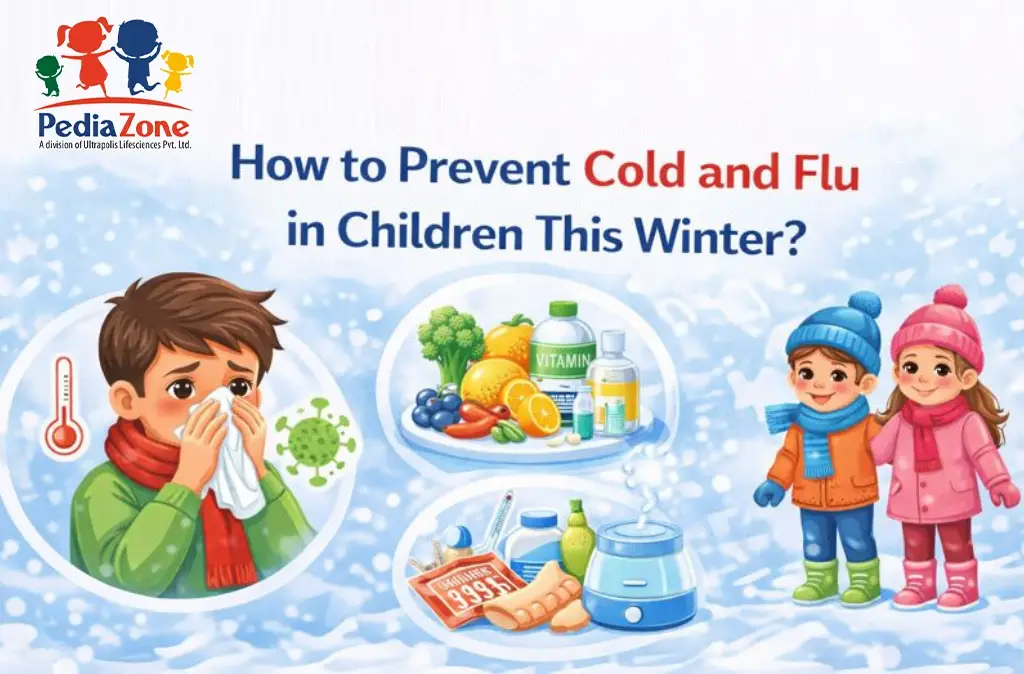
Focus on having a balanced diet with plenty of fruits, vegetables, and whole grains along with lean proteins. Vitamin C-containing foods such as oranges, strawberries, and sweet peppers help to strengthen the body, while zinc-containing foods such as nuts, seeds, and pulses assist in fighting infection.
The average school-going age requires 9-11 hours of sleep per night, and children who are still young might need even more.
Encourage Proper Hand Hygiene
The simple act of teaching children how to wash their hands properly is one of the most powerful preventive measures you can take to protect them from getting sick. Teach them to wash their hands with soap and water for at least 20 seconds, particularly before eating, after using the bathroom, and when they come home from school or being outdoors.
To remind children not to touch their face, particularly their eyes, nose, and mouth, which are the typical entry points of the viruses.
Dress for the Weather
Cold weather does not make people sick, but the lack of appropriate clothes can make the body weak enough to resist infection. Always ensure your child has warm clothes over them, such as hats, gloves, and scarfs whenever they go outside.
Keep Vaccinations Up to Date
Most children above six months should get yearly flu vaccinations, according to pediatricians. Immunizing your child is not only a way to prevent flu in your child, but it also prevents airborne flu in schools and communities.
Always ensure that all standard vaccinations are up to date by consulting with the healthcare provider, since they are essential not only in overall well-being, but also in preventing diseases.
Maintain a Clean Home Environment
Washing hands of many commonly touched surfaces like doorknobs, light switches, toys, electronic devices, etc., regularly will help cut down on the number of germs that spread.
It is also important to have good indoor air quality. It’s preventable by using a humidifier to stop your nasal passages from drying out when the air is dry, which makes it easy for viruses to gain entry into the body.
Promote Physical Activity and Outdoor Time
Children need to remain active even during winter, which is beneficial to their physical and immune systems. Indoor activities, yoga, or even basic games should be encouraged where outside games cannot be played. During less hot weather, outdoor activities can get air and sunlight, which may improve mood and vitamin D levels.
Know When to Keep Your Child Home
If your child has symptoms such as fever, coughing, sore throat, or is running very tired, keep them home from school. This allows them to be treated more quickly and avoid infecting other people. Seek medical advice if the symptoms continue or get worse.
Cold and flu season does not necessarily imply that your child will always be sick. Parents can greatly decrease the risk of illness by ensuring that they eat well, have good hygiene, get enough sleep, are vaccinated, and have a clean environment. Minute, regular habits would do wonders and help to keep your child healthy, happy, and active during the winter season.