
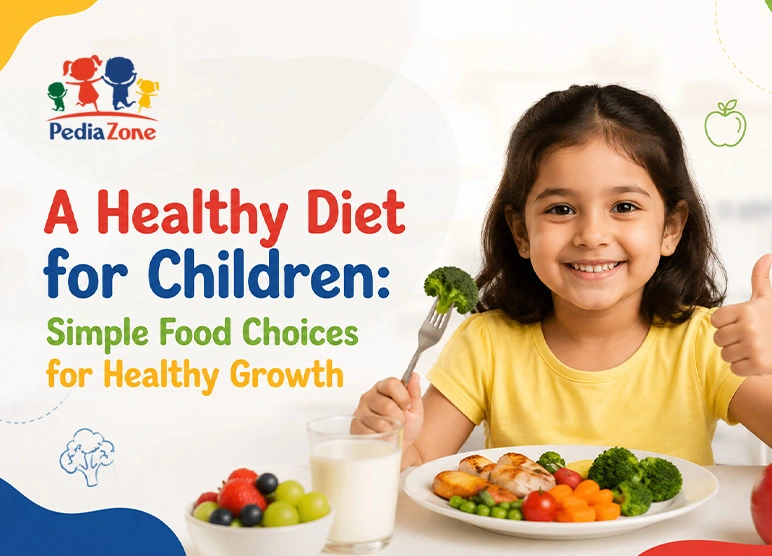
A Healthy Diet for Children: Simple Food Choices for Healthy Growth
Easy nutrition tips to help your kid grow, stay active, and build healthy eating habits.
Every parent wants their child to grow up strong and healthy. Good nutrition plays an important role in making that happen. The food children eat every day gives them the energy to grow, learn and play. Children need a mix of healthy foods every day. A balanced diet helps build strong bones, supports Brain growth, and keeps the Immune system healthy. It also helps children stay active and maintain a healthy weight. Healthy eating does not have to be difficult. Small changes at home can make a big difference over time.
Why Healthy Eating Matters for Growth
As children grow, their bodies need a healthy diet to support that growth.
A healthy diet can help your kid:
- In building strong bones and muscles.
- Staying active throughout the day.
- In supporting brain development and learning.
- In keeping their immune system strong.
- In maintaining a healthy weight.
- In building healthy eating habits for life.
The habits kids learn in their early stages of life often stay with them as they grow older.
What is a Balanced Diet?
A balanced diet includes foods from different food groups that provide nutrients that the body needs.
Try to include these foods in your child’s daily meals.
Fruits and Vegetables
Fruits and vegetables are full of vitamins, minerals, and fiber. They help support growth and keep the body healthy.
Offer different colors throughout the week. Colorful fruits and vegetables provide different nutrients.
Good choices include:
- Apples
- Bananas
- Oranges
- Berries
- Carrots
- Spinach
- Tomatoes
- Cucumbers
- Sweet potatoes
Fresh, frozen, and homemade options are all good choices.
Whole Grains
Whole grains provide energy and fiber. They help children stay full for longer.
Choose foods like:
- Whole wheat bread
- Brown rice
- Oats
- Whole wheat pasta
- Millet
- Whole grain cereals
These foods are better choices than refined grains whenever possible.
Protein Foods
Protein helps build muscles and supports healthy growth.
Good sources include:
- Eggs
- Chicken
- Fish
- Lentils
- Beans
- Chickpeas
- Tofu
- Paneer
Try to include a protein-rich food with every main meal.
Dairy Foods
Milk and dairy products provide calcium and vitamin D. These nutrients help build strong bones and teeth.
Healthy choices include:
- Milk
- Yogurt
- Cheese
If your child cannot have dairy, ask your pediatrician about other calcium-rich foods.
Healthy Fats
Children also need healthy fats for brain growth and energy.
Good sources include:
- Nuts (for older children who can eat them safely)
- Seeds
- Avocados
- Peanut butter
- Healthy cooking oils
Serve these foods in suitable portions.
Do Not Skip Breakfast
Breakfast gives children energy for the day ahead.
A healthy breakfast helps improve focus and keeps children full until the next meal.
Easy breakfast ideas include:
- Oatmeal with fruit
- Whole wheat toast with peanut butter
- Boiled eggs and toast
- Yogurt with fruit
- Vegetable paratha with curd
Try to avoid sugary breakfast foods whenever possible.
Healthy Snacks Matter Too
Children often feel hungry between meals.
Choose snacks that provide nutrition instead of empty calories.
Healthy snack ideas include:
- Fresh fruit
- Yogurt
- Cheese cubes
- Roasted chickpeas
- Homemade popcorn
- Vegetable sticks with hummus
- Boiled corn
- Mixed nuts for older children
Keeping healthy snacks at home makes better choices easier.
Encourage Children to Drink Water
Water is the best drink for most children.
It keeps the body hydrated and supports many body functions.
Encourage your child to drink water throughout the day, especially after outdoor play.
Limit sugary drinks such as soft drinks, packaged juices, and energy drinks. These drinks add extra sugar without much nutrition.
Make Mealtimes Enjoyable
Children are more likely to eat healthy foods when mealtimes are calm and enjoyable.
Try these simple ideas:
- Eat together as a family whenever possible.
- Turn off the television during meals.
- Let children help prepare simple foods.
- Offer new foods without forcing them.
- Be patient if your child refuses a new food.
Children may need several tries before accepting a new taste.
Be a Good Role Model
Children often copy what they see.
If they see parents enjoying healthy foods, they are more likely to try them too.
Eat fruits and vegetables together. Choose water instead of sugary drinks. Show children that healthy eating is part of everyday life.
Small actions often teach more than words.
Foods to Limit
No food needs to be completely banned. However, some foods should only be eaten once in a while.
These include:
- Chips
- Candy
- Cakes
- Cookies
- Soft drinks
- Fried foods
- Packaged snacks high in salt
Enjoy these foods as occasional treats rather than everyday choices.
Dealing with Picky Eaters
Many children go through a picky eating stage.
Stay calm and avoid forcing your child to eat.
Offer small portions and let your child decide how much to eat.
Keep serving healthy foods, even if they refuse them at first.
Praise your child for trying new foods instead of finishing everything on the plate.
Most children become more willing to try new foods with time.
Healthy Eating Starts at Home
Parents play an important role in building healthy habits.
Keep healthy foods within easy reach.
Fill lunch boxes with colourful, balanced meals.
Celebrate healthy choices instead of using sweets as rewards.
Simple family habits can make healthy eating feel normal and enjoyable.
Every Child Is Different
Every child has different food needs based on their age, growth, and activity level.
Some children naturally eat more than others.
Instead of comparing your child with others, focus on offering balanced meals each day.
If you have concerns about your child’s weight, growth, or eating habits, speak with your pediatrician for guidance.
Final Thoughts
Healthy eating is not about following strict rules. It is about making good food choices most of the time.
Small changes can lead to lifelong healthy habits.
Offer a variety of nutritious foods, encourage regular meals, and make family mealtimes enjoyable.
With love, patience, and healthy choices, you can help your child grow into a happy, active, and healthy adult.