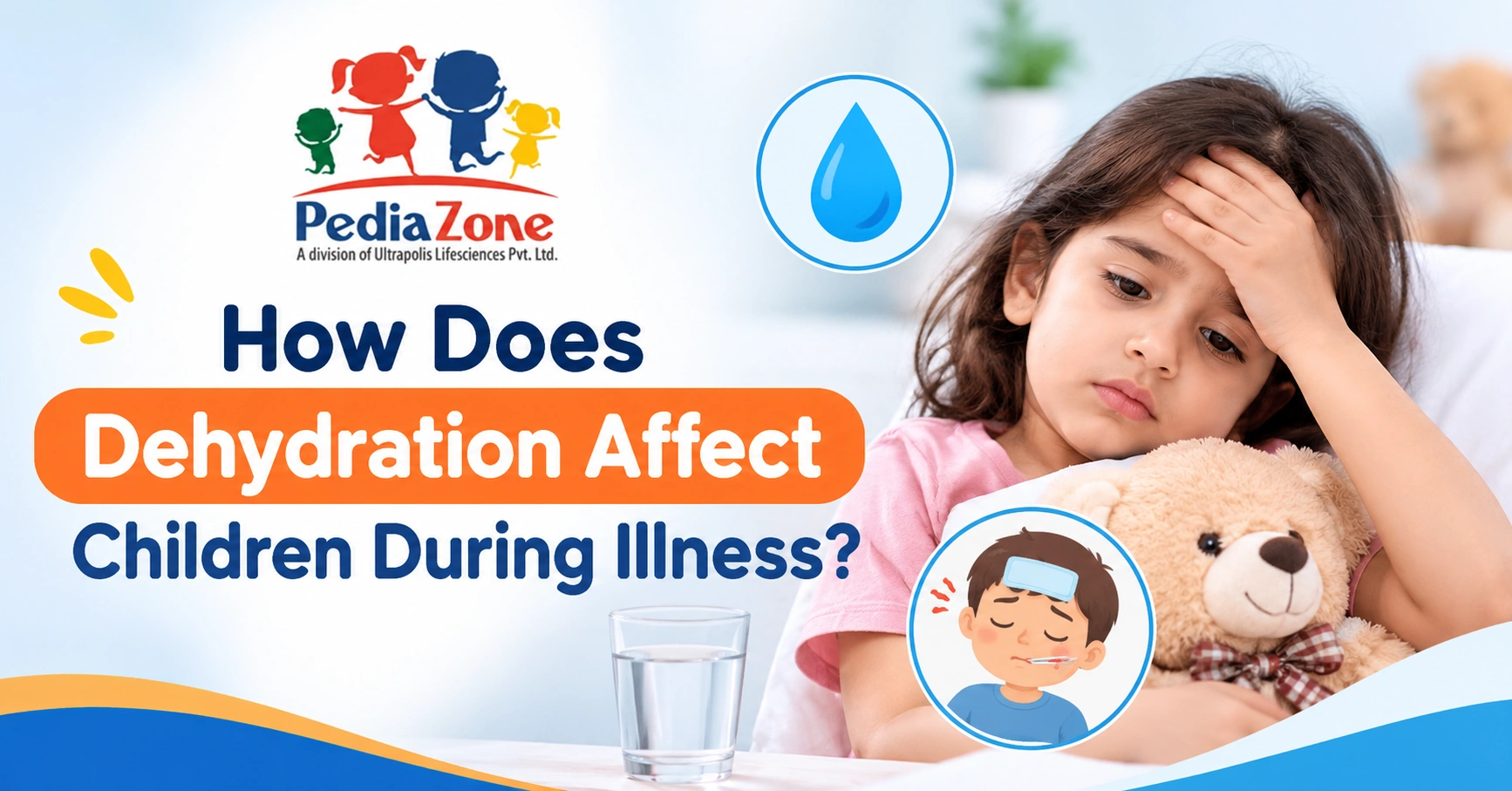
How Does Dehydration Affect Children During Illness?
When children are unwell, they may eat and drink less than usual. Fever, vomiting, and diarrhoea can also cause the body to lose more fluid.
If these fluids are not replaced, a child can become dehydrated.
Dehydration means the body does not have enough fluid to work properly. It can happen during many common illnesses, but younger children can become dehydrated more easily.
Knowing the early signs can help parents respond before dehydration becomes severe.
Why Can Children Become Dehydrated During Illness?
The body constantly loses water through urine, sweat, breathing, and bowel movements.
Normally, children replace these fluids by drinking water and getting fluids from food.
During illness, this balance can change.
A child with fever may lose more fluid through sweating. Vomiting can cause the body to lose both fluid and important salts.
Diarrhoea can cause even greater fluid loss, especially when it happens repeatedly.
At the same time, a sick child may refuse water or other fluids because of nausea, weakness, or poor appetite.
Together, these factors can increase the risk of dehydration.
What Are the Early Signs of Dehydration?
Parents may notice changes in a child’s usual behaviour and physical condition.
Some early signs can include:
• Increased thirst
• Dry mouth or tongue
• Fewer wet diapers or less frequent urination
• Darker urine
• Tiredness or unusual weakness
• Crying with fewer tears
• Dry or less moist skin
The signs can vary depending on the child’s age and how much fluid has been lost.
A child who is drinking less than usual should be watched more closely, especially during vomiting, diarrhoea, or fever.
Why Is Urination Important to Watch?
Urination can give parents a useful idea about a child’s fluid intake.
When the body does not have enough fluid, the kidneys try to conserve water. This can lead to less frequent urination and darker urine.
For babies and younger children, parents can monitor how often diapers are becoming wet.
There is no single number of wet diapers that applies to every child, so changes from the child’s usual pattern are important.
If urination becomes very infrequent, medical advice may be needed.
Can Fever Cause Dehydration?
Yes, fever can increase the risk of dehydration.
A child with a fever may sweat more and lose additional fluid.
Some children also drink less when they feel unwell.
This does not mean every child with a fever will become dehydrated. The risk depends on how high the fever is, how long it lasts, fluid intake, and whether other symptoms are present.
Offering suitable fluids regularly can help replace fluid losses.
What Happens When a Child Has Vomiting or Diarrhoea?
Vomiting and diarrhoea can cause fluid loss quickly.
Repeated vomiting can make it difficult for a child to keep fluids down.
Diarrhoea can cause the body to lose water and important electrolytes.
This is why replacing only water may not always be enough when significant fluid loss occurs.
Oral rehydration solution, commonly called ORS, contains specific amounts of water, salts, and glucose.
It is designed to help replace fluids and electrolytes lost during diarrhoea and vomiting.
How Should ORS Be Given?
ORS should be prepared according to the instructions on the packet.
Using too little or too much water can change the concentration of the solution.
For a child who feels nauseous or has been vomiting, small and frequent amounts may be easier to tolerate than giving a large amount at once.
If the child vomits after drinking, parents should follow medical advice about how to continue fluids.
A healthcare professional can also advise on the appropriate amount based on the child’s age, condition, and fluid losses.
Is Water Enough During Dehydration?
Water is important for everyday hydration.
However, when a child has significant fluid loss from diarrhoea or vomiting, the body may also lose electrolytes.
ORS is specifically formulated to help replace both fluids and electrolytes.
Soft drinks, very sugary beverages, or homemade mixtures with uncertain amounts of salt and sugar are not reliable substitutes for properly prepared ORS.
Parents should use an appropriate ORS product and prepare it exactly as directed.
What If a Child Does Not Want to Drink?
Children may refuse fluids when they feel sick.
Parents can offer small amounts frequently instead of expecting the child to drink a large amount at once.
Depending on the child’s age and condition, suitable fluids can be offered at regular intervals.
If vomiting continues or the child cannot keep fluids down, parents should seek medical advice.
The goal is not to force a large amount of fluid at once. Small, repeated amounts may be easier for some children to manage.
Can Food Provide Fluids Too?
Yes. Some foods contain a significant amount of water.
Fruits, vegetables, soups, and other suitable foods can contribute to overall fluid intake.
However, during significant dehydration, food alone is not enough to replace lost fluids and electrolytes.
Fluids remain important, especially when a child has vomiting or diarrhoea.
Once the child feels better, returning to normal age-appropriate meals can help support recovery.
When Does Dehydration Become Serious?
Severe dehydration needs urgent medical attention.
Parents should seek prompt medical help if a child is extremely sleepy, difficult to wake, unusually weak, confused, or unable to drink.
Very little or no urine for an extended period can also be concerning.
Other warning signs include a very dry mouth, sunken eyes, rapid breathing, or worsening symptoms.
Babies and very young children require particular attention because they can become dehydrated more quickly.
Parents should not wait for severe symptoms if they are concerned about a child’s condition.
How Can Parents Help Prevent Dehydration?
Parents can take simple steps when a child becomes sick.
Offer fluids regularly, especially during fever, vomiting, or diarrhoea.
Keep an eye on urination and changes in the child’s usual behaviour.
If diarrhoea or vomiting occurs, ask a healthcare professional about ORS and how it should be given.
Continue age-appropriate feeding when the child is able to eat.
During hot weather or increased physical activity, children may also need more fluids.
What Parents Should Know
Dehydration can develop when a child loses more fluid than they take in.
Fever, vomiting, and diarrhoea can increase this risk, especially when a child is drinking less than usual.
Parents should watch for signs such as dry mouth, fewer wet diapers, reduced urination, darker urine, unusual tiredness, and fewer tears.
ORS can help replace fluids and electrolytes lost during vomiting and diarrhoea when used correctly.
If a child cannot drink, keeps vomiting, urinates very little, or becomes unusually sleepy or weak, medical attention is important.
Recognising dehydration early can help parents take the right steps and support a child’s recovery.