
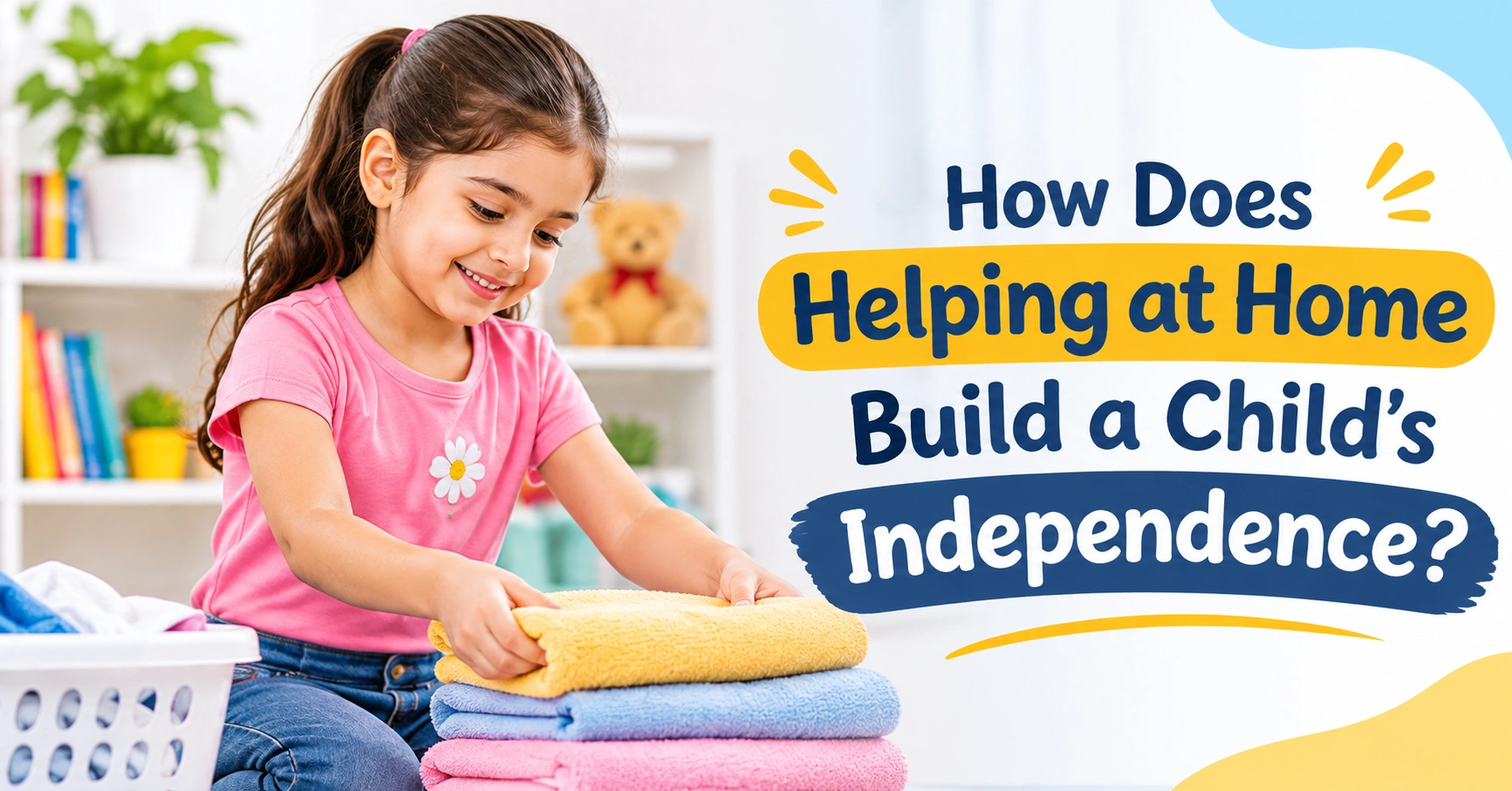
How Does Helping at Home Build a Child’s Independence?
Children learn many important skills outside the classroom. Simple activities at home can also teach them how to take responsibility, make choices, solve small problems, and care for their surroundings.
When children are given suitable tasks at home, they begin to understand that they can contribute to everyday family life.
Helping at home does not mean giving children difficult responsibilities. It means allowing them to take part in simple tasks that match their age and abilities.
What Does Independence Mean for Children?
Independence means gradually learning to do suitable tasks without always depending on an adult.
For a young child, independence could mean putting toys away after playing.
For an older child, it could mean organising their school bag, keeping their room tidy, or helping prepare simple things for the next day.
These small actions may seem ordinary, but they help children practise useful life skills.
How Does Helping at Home Build Responsibility?
When children are given regular tasks, they begin to understand that certain things need to be done even when nobody reminds them.
A child may learn that toys need to be put away after playtime or that school items need to be kept ready.
Over time, this can help children understand responsibility.
Parents can start with one or two simple tasks instead of giving many instructions at once.
The goal is to help children participate, not to make household work feel like a punishment.
Can Household Tasks Improve Confidence?
Yes. Completing a task successfully can give children a sense of achievement.
A child who learns to fold their clothes, arrange books, or help set the table may feel proud of being able to do something independently.
Parents can encourage this progress without expecting perfection.
A task may not be completed exactly as an adult would do it.
Allowing children to practise is more important than making every task look perfect.
How Do Simple Tasks Help Children Make Decisions?
Everyday activities give children opportunities to make small choices.
They may decide where to keep their books, which clothes to wear from suitable options, or how to arrange their school supplies.
These simple decisions help children think about what they need to do and what choice makes sense.
Parents can guide these decisions while still allowing children some control.
Giving children choices does not mean letting them decide everything.
It means giving them appropriate opportunities to practise decision making.
How Can Helping at Home Teach Problem Solving?
Children often face small problems while completing everyday tasks.
A toy may not fit into a storage box. Their books may not fit neatly on a shelf. They may need to decide how to organise their school bag.
Instead of solving every problem immediately, parents can ask simple questions.
“What could you try?”
“Where else could this go?”
“What do you think would make this easier?”
Questions like these encourage children to think before asking an adult to solve the problem.
Should Parents Give Tasks According to Age?
Yes. Household responsibilities should match the child’s age, abilities, and safety needs.
Younger children can help put toys away, place dirty clothes in a basket, or carry lightweight items.
Older children may help organise their belongings, water plants, set the table, or assist with other suitable household tasks.
Tasks involving sharp objects, hot surfaces, medicines, cleaning chemicals, or other hazards should not be given without appropriate supervision.
The purpose is to build independence while keeping children safe.
What If a Child Does Not Want to Help?
Not every child will be excited about household tasks.
Parents can make the expectation clear without turning every task into an argument.
It can help to give children a choice between two suitable tasks.
For example, they could choose between putting away their toys or arranging their books.
Parents can also explain why the task matters rather than simply saying, “Because I told you to.”
A calm and consistent approach can help children understand that helping at home is part of everyday family life.
Should Parents Correct Every Small Mistake?
Not necessarily.
Children are still learning, so their way of completing a task may look different from an adult’s way.
If a child puts something in the wrong place, folds clothes unevenly, or takes longer than expected, parents can offer guidance without taking over.
Too much correction can make children afraid of making mistakes.
Instead, parents can show them how to improve the task and allow them to try again.
How Does Helping Others Build Social Skills?
Household tasks can also teach children that family members share responsibilities.
A child may learn that everyone contributes in different ways.
This can encourage cooperation, consideration, and awareness of other people’s needs.
For example, helping set the table teaches that meals involve preparation, not just eating.
Putting toys away teaches that shared spaces need to be kept organised.
These everyday experiences can help children understand cooperation in a practical way.
What If Parents Are Short on Time?
Parents do not need to create a special schedule for household responsibilities.
Small tasks can become part of activities that already happen every day.
A child can put their shoes away after coming home, place clothes in the laundry basket, or keep school items ready before bedtime.
Consistency matters more than the number of tasks.
Even a few minutes of participation each day can give children opportunities to practise independence.
What Parents Should Know
Helping at home can teach children much more than household skills.
Age-appropriate tasks can help them practise responsibility, decision making, problem solving, cooperation, and self-confidence.
Children do not become independent all at once.
They develop these skills gradually through repeated opportunities to try, make mistakes, and try again.
Parents can support this process by giving suitable responsibilities, offering guidance when needed, and allowing children enough space to do things on their own.
Small responsibilities today can help children feel more capable of handling bigger responsibilities as they grow.