
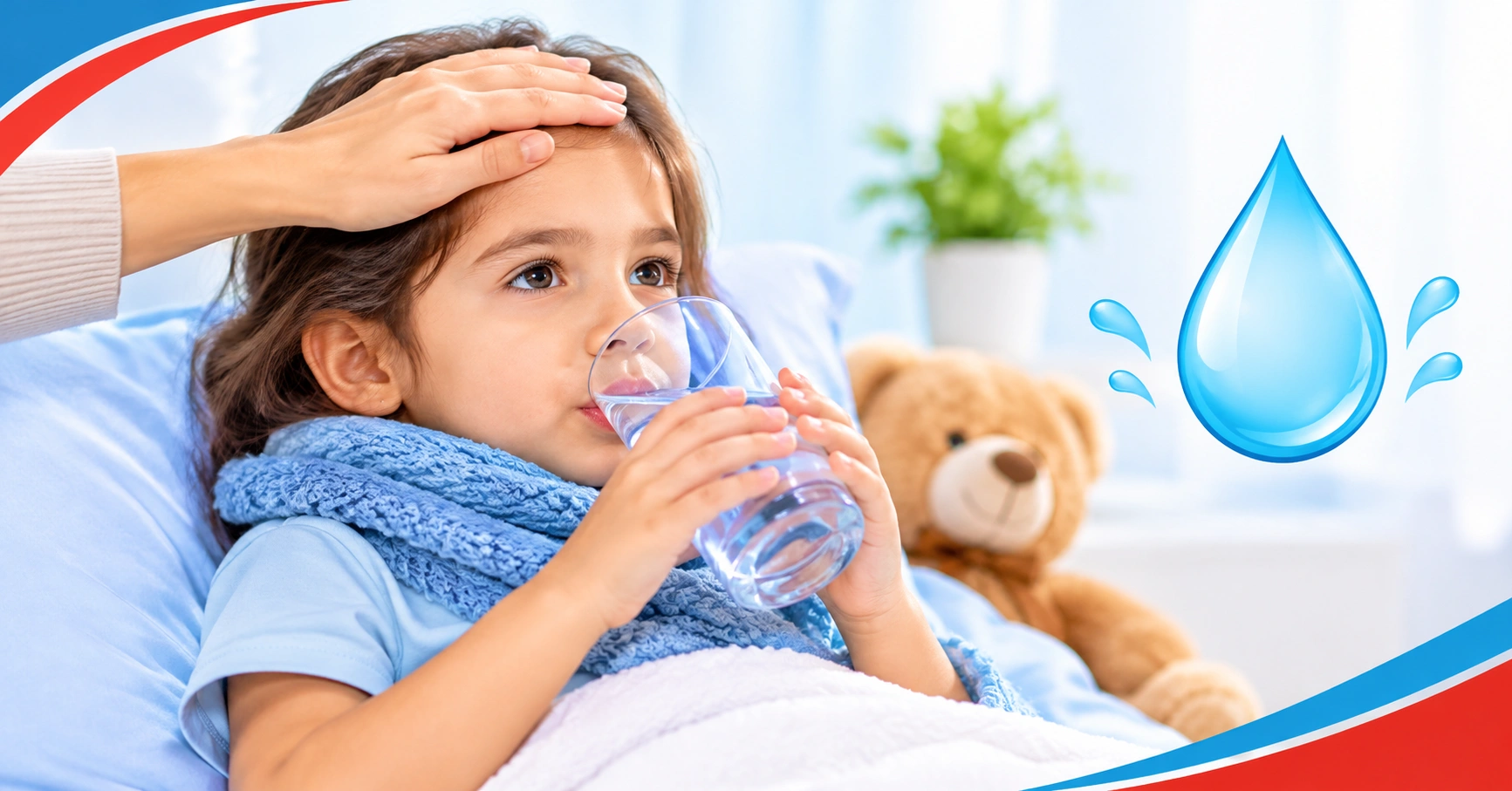
Why Do Children Need More Fluids When They Are Unwell?
When children fall sick, they may drink less water than usual. A sore throat, fever, vomiting, or an upset stomach can make drinking uncomfortable or difficult.
At the same time, illness can increase the amount of fluid their bodies lose. This makes it important for parents to pay attention to their child’s fluid intake.
Offering suitable fluids regularly can help prevent dehydration and support recovery during many common childhood illnesses.
Why Does the Body Need Fluids During Illness?
Water helps regulate body temperature, transport nutrients, and maintain normal body functions.
When children have a fever, they can lose more fluids through sweating and faster breathing. Vomiting and diarrhea can cause additional fluid loss.
If children do not drink enough to replace these losses, they can become dehydrated.
Young children, especially babies, can become dehydrated more quickly than older children. Parents should therefore watch their drinking habits and urine output closely when they are unwell.
Can Fever Increase a Child’s Fluid Needs?
Yes. Fever can increase fluid loss because the body may produce more sweat and breathe faster than usual.
A child with a fever may also feel tired or uncomfortable and drink less frequently.
Offer small amounts of fluid regularly rather than waiting for the child to ask for a drink. Allow the child to rest and follow the healthcare professional’s advice for managing the fever.
If the child is unusually sleepy, has difficulty breathing, cannot drink, or shows signs of dehydration, seek medical advice promptly.
Why Are Fluids Important During Vomiting and Diarrhea?
Vomiting and diarrhea can cause the body to lose both water and essential salts called electrolytes.
Replacing these losses is important because severe dehydration can become dangerous.
An oral rehydration solution, commonly called ORS, helps replace water and electrolytes lost during diarrhea and vomiting. Prepare it according to the packet instructions, using the exact amount of safe water specified.
Offer small, frequent sips. If the child vomits, pause briefly and restart more slowly. If vomiting continues or the child cannot keep fluids down, seek medical advice.
Plain water alone may not adequately replace electrolyte losses in significant diarrhea, so ORS is often recommended.
What If a Child Refuses to Drink?
Children may refuse drinks when they feel nauseated, have a sore throat, or lack energy.
Instead of offering a large glass at once, try small sips at frequent intervals. A spoon or oral syringe can help offer small amounts to a young child when appropriate.
Older children may find it easier to drink from their favourite cup or take small sips while resting.
For babies who are breastfed, continue offering breast milk frequently. Formula-fed babies generally need their usual correctly prepared formula unless a healthcare professional advises otherwise.
If a child refuses all fluids or shows signs of dehydration, do not rely on home measures alone.
Which Fluids Are Suitable for Children?
The best choice depends on the child’s age, symptoms, and the amount of fluid being lost.
- Breast milk: Continue breastfeeding frequently during illness.
- Usual formula: Continue correctly prepared infant formula unless advised otherwise.
- Water: Suitable for children who are old enough to drink water as part of their usual diet.
- Oral rehydration solution: Useful for replacing water and salts lost through diarrhea and vomiting.
- Usual age-appropriate drinks and foods: Children who can tolerate them can continue their normal diet as they recover.
Avoid using soft drinks, energy drinks, or very sugary beverages to manage dehydration. They are not suitable substitutes for ORS during significant fluid loss.
Babies younger than six months should not be given extra plain water unless specifically advised by a healthcare professional.
How Can Parents Recognize Dehydration?
Parents can look for changes in their child’s usual behaviour and physical condition.
Possible signs of dehydration include:
- Passing urine less often than usual.
- Darker urine in children who normally use the toilet.
- A dry mouth or dry lips.
- Fewer tears when crying.
- Unusual tiredness, irritability, or reduced activity.
- Sunken eyes.
- In babies, a sunken soft spot on the head can be a concerning sign.
No single sign can confirm dehydration in every child. However, several signs together, or symptoms that are getting worse, need prompt medical attention.
Severe sleepiness, difficulty waking, cold or discoloured skin, rapid or difficult breathing, or inability to drink require urgent medical assessment.
How Can Parents Encourage Regular Drinking?
A few simple habits can make drinking easier during illness.
Offer small amounts of suitable fluids frequently throughout the day. Keep drinks within reach when the child is resting, and offer extra fluids when fever or fluid loss increases their needs.
For children with vomiting or diarrhea, use ORS as advised and offer it slowly.
Do not force a child to drink a large amount at once. Avoid delaying medical care when the child is becoming weaker or cannot keep fluids down.
Parents should also monitor urine output, alertness, and whether the child is gradually becoming more comfortable.
When Should Parents Contact a Doctor?
Seek medical advice if a child drinks much less than usual, passes very little urine, has repeated vomiting or diarrhea, or shows signs of dehydration.
Babies, particularly very young infants, need extra caution because their condition can worsen quickly. Contact a healthcare professional promptly if an infant develops a fever or has difficulty feeding.
Urgent assessment is necessary if a child is difficult to wake, cannot drink, has severe breathing difficulty, or shows signs of severe dehydration.
What Parents Should Know
Children can lose fluids quickly during fever, vomiting, and diarrhea. Offering suitable fluids regularly helps replace losses and supports normal body functions.
Watch for reduced urination, a dry mouth, unusual tiredness, and other signs of dehydration. Use ORS when appropriate, and continue breastfeeding during illness.
Keeping children hydrated is an important part of illness care, but warning signs should never be ignored.